The Kremlin's Portable Man
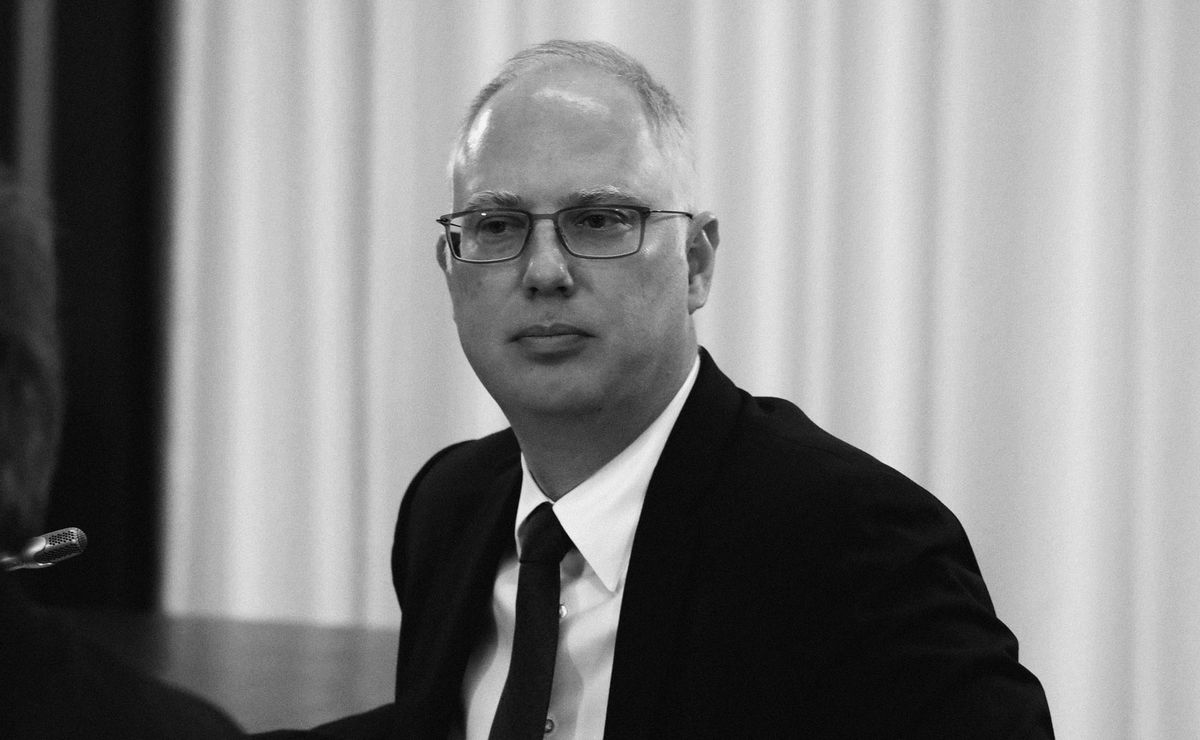
Kirill Dmitriev and the Art of Ideological Flexibility
In February 2025, a peculiar drama unfolded in a Riyadh conference room. Foreign Minister Sergei Lavrov arrived for the first high-level US-Russia talks since the invasion of Ukraine to find three chairs on the Russian side instead of two. Upon learning the third was for Kirill Dmitriev, the fund manager who had evidently secured Putin's blessing without informing him, Lavrov physically moved the chair away from the table. "If he wants to take part," the career diplomat declared, "let Vladimir Vladimirovich tell me himself."
Dmitriev retreated to the hallway. But during a break, when Lavrov stepped away, he slipped back in and took a seat. The diplomat returned to find the interloper installed. Making a scene would have meant losing face before the Americans. Dmitriev got his fifteen minutes at the table.
This episode—part court intrigue, part dark comedy—reveals something essential about Kirill Alexandrovich Dmitriev, the 49-year-old Stanford-and-Harvard-educated CEO of the Russian Direct Investment Fund who has become, against considerable odds, Vladimir Putin's preferred interlocutor with Donald Trump's America. It demonstrates his willingness to operate in the spaces between formal structures, his talent for exploiting ambiguity, and his capacity to endure humiliation in service of advancement. Most significantly, it raises the question that has followed him from Kyiv kindergartens to Kremlin corridors: what does this man actually believe?
A Kyiv Childhood, a Soviet Identity
The biographical facts are well-established, though Dmitriev has increasingly sought to obscure the most awkward of them. He was born on 12 April 1975 in Kyiv, Soviet Ukraine, to a family of biologists. His grandfather was a colonel in the Kyiv Military District who commanded chemical defence troops. When the Russian investigative outlet The Bell (Колокол) asked about his birthplace in 2021, Dmitriev offered a revealing correction: "Not in Ukraine—in the USSR." The distinction mattered to him.
The documentary record of his teenage political sympathies is thin but tantalising. A friend has claimed he joined an anti-Soviet student protest at 15. More substantively, when the 15-year-old Dmitriev travelled to New Hampshire as one of the first Soviet exchange students from Ukraine in 1989, a local newspaper quoted him highlighting his homeland's identity: "Ukraine had a long history as an independent nation before it became part of the Russian empire." At Stanford, he later wrote a thesis on privatisation in Ukraine, noting it would "prepare me better for contributing to the reform process in Ukraine."
These were the words of someone who appeared to believe in an independent Ukrainian future—spoken by a teenager who would, three decades later, draft peace proposals effectively denying Ukrainian sovereignty, push narratives about Ukrainian "Nazis," and serve as Putin's emissary while making no public acknowledgement of his own Ukrainian birth.
The American Chrysalis
Dmitriev's American career represents a remarkable feat of class mobility. Arriving with no prior English instruction and only a Soviet middle-school education, he talked his way into Foothill College in California, earned a full scholarship to Stanford (rare for foreign students), graduated with honours in economics in 1996, and capped it at Harvard Business School, where he graduated with high distinction as a Baker Scholar—top five percent of his class—in 2000.
The institutions that shaped him were temples of American meritocracy: Goldman Sachs in New York, McKinsey & Company across three continents. He absorbed their language, their frameworks, and their networking rituals. He became fluent not just in English but in the dialect of globalised capital—the can-do pragmatism, the relationship-focused deal-making, the ability to present himself as whatever a given room required.
No writings or public statements survive from this period that reveal ideological commitments. What we have instead is a trajectory: a young man from Kyiv assembling the portable credentials of the transnational elite. Classmates and colleagues from that era describe ambition, charm, and a near-total focus on professional advancement. Whether he possessed political convictions beyond careerism, he kept them to himself.
Then, in 2000, he made a fateful choice. With job offers from Goldman Sachs and McKinsey, Dmitriev returned to Moscow.
The Officer's Licence
The year 2000 was Vladimir Putin's year. On New Year's Eve 1999, Boris Yeltsin had resigned and named the obscure former KGB officer acting president. By May, Putin was inaugurated. And sometime that year, Kirill Dmitriev—holder of a Ukrainian passport, recent Harvard MBA, investment banker with transatlantic options—arrived in Moscow, purchased a secondhand Land Rover, and registered it with a document that raises questions to this day.
According to The Insider (Инсайдер), a Russian investigative outlet, Dmitriev registered his car not with his Ukrainian passport but with a Russian officer's identification document, number AM1198939, issued in 2000. When journalists cross-referenced similar alphanumeric codes in Moscow address databases, they found that comparable documents had been issued to graduates of the SVR Academy (foreign intelligence), GRU officers, and residents of military institute dormitories.
How a Ukrainian citizen obtained such a document remains unexplained. Dmitriev has never addressed it publicly. The Insider's sources suggested that a "person with connections" could acquire such documents without formal military service. The finding proves nothing conclusively—but it sits uncomfortably alongside a career trajectory that, in retrospect, exhibits classic patterns of commercially-covered intelligence work: Western education providing language and network access, positions at prestigious institutions, return at a strategically significant moment, rapid rise to foreign-facing roles, unusual access to senior leadership, and involvement in back-channel diplomacy far exceeding any normal fund manager's remit.
His first Moscow position was modest: deputy general director at IBS, a Russian IT company. He lived in a two-room apartment. But his connections were developing. According to the investigative project Important Histories (Важные истории), his patron was Lieutenant General Andrei Chobotov of the FSB, chief of the Presidential Anti-Corruption Directorate—a man with direct lines to Sergei Ivanov, Putin's chief of staff. "Through Kirill Alexandrovich," one source told investigators, "almost any problem can be resolved."
The Education of an Operator
Before his ascent to the heights of Russian state capitalism, Dmitriev returned to the country of his birth—this time as a representative of foreign capital. From 2007 to 2011, he ran Icon Private Equity, a fund that initially concealed its sole shareholder's identity. That shareholder turned out to be Viktor Pinchuk, the metals oligarch and son-in-law of former Ukrainian president Leonid Kuchma.
Working for Pinchuk meant learning to operate within the ecosystem of administrativnyi resurs (административный ресурс)—the Russian/Ukrainian term for weaponising state power for private ends. Regulatory favouritism, access to government contracts, protection from prosecution: these were the currencies of post-Soviet business. Dmitriev ran a billion-dollar fund in this environment, making deals that included selling a company to Bank Rossiya (later known as "Putin's bank").
It was during this period that his public statements took a notable turn. On Ukrainian television in 2010, he warned that Ukraine would face an "economic Holodomor"—a reference to Stalin's genocidal famine that killed millions of Ukrainians—if it pursued isolation from Russia. The metaphor was inflammatory, historically loaded, and revealing: here was a man born in Kyiv deploying the memory of Ukrainian genocide to advocate economic dependence on Moscow.
Two years later, having returned to Russia to head the newly created Russian Direct Investment Fund, he offered his judgement on Ukraine's democratic experiment. In an interview with Vedomosti (Ведомости), Russia's leading business daily, he described the Orange Revolution as producing "so-called democratic changes" that led to "corruption increasing three to four times, to a wild struggle among these democratic clans who were united only at the beginning... Accordingly, the democratic idea in Ukraine has been largely discredited."
The teenager who had told a New Hampshire newspaper about Ukraine's history as an independent nation had become a man who saw Ukrainian democracy as a cautionary tale.
The Kremlin's Western Face
RDIF was created in June 2011 under Medvedev and Putin with $10 billion in reserved capital and a mission to attract foreign investment into Russia. Dmitriev was hand-picked for the role—reportedly recommended by Pinchuk himself to VEB chairman Vladimir Dmitriev (no relation). The position suited him perfectly: a state institution requiring someone who could speak the language of Davos while serving Moscow's interests.
His connections ran deeper than any business relationship justified. His wife, Natalia Popova, was a university classmate and close friend of Katerina Tikhonova, widely believed to be Putin's daughter. Dmitriev attended the Tikhonova wedding in 2012. His wife co-founded a company with Tikhonova and works at her Innopraktika Foundation. According to the US Treasury, which sanctioned RDIF as "a slush fund for Vladimir Putin" in February 2022, Dmitriev "extensively leverages his connections with her for lobbying purposes."
The fund has claimed 2.3 trillion roubles in investments across more than 100 projects. Whether these numbers represent genuine economic development or inflated accounting is disputed. What is clearer is RDIF's function as an instrument of Russian foreign policy. Through co-investment vehicles with Saudi Arabia's Public Investment Fund, the UAE's Mubadala, and China's CIC, Dmitriev built relationships that gave Russia financial alternatives when Western capital markets closed after 2014—and diplomatic leverage that paid dividends.
His cultivation of Mohammed bin Salman proved particularly valuable. First introduced by Abu Dhabi's crown prince in 2014, Dmitriev met MBS "dozens of times" over the following decade. When the Saudi-Russia oil price war threatened both countries' economies in early 2020, Dmitriev served as the link between Putin and Riyadh. "The essence of this relationship is trust," he told Arab News. In October 2019, MBS awarded him the Order of King Abdulaziz, Second Class—the highest honour the kingdom bestows on foreign civilians—making Dmitriev only the second Russian so honoured after Putin himself.
The Rhetoric of the Reasonable Businessman
Dmitriev's public communications reveal a carefully constructed persona: the apolitical fund manager seeking only prosperity through cooperation. In Bloomberg Television interviews spanning from 2012 to 2018, he deployed a consistent rhetorical arsenal.
At Davos in January 2012, asked about European investment opportunities, he presented himself as a "careful optimist" concerned with "growth trajectories" and "synergies." He spoke of RDIF's partnership with China Investment Corporation, of logistics and agriculture investments benefiting from increased trade. The language was pure McKinsey: "value-added forestry," "joint trace and cooperation," "synergistic effect with Russia." Nothing suggested an institution that would later be designated a slush fund for the Russian president.
By 2018, as sanctions tightened, his framing shifted subtly. At Davos that January, asked about potential new sanctions targeting Russian oligarchs, he deflected: "Russia very much adjusted to existing sanctions and, you know, our growth is 2 percent... the sanctions even helped some sectors of the economy like agriculture." When pressed about RDIF's investments in companies controlled by sanctioned individuals like Oleg Deripaska, he reframed it as sound investment practice: "We see the company is performing quite well. Lots of other partners came in."
Most revealing was his response to questions about sovereign wealth funds being targeted: "Any attack on sovereign wealth fund is a very dangerous thing, because it would set a precedent where a nation's wealth is under attack and frankly, sovereign wealth funds then would move away from dollar and they'll find a way to reduce this risk of being sanctioned any time." The threat was dressed in the language of market logic, but the message was clear.
At the St Petersburg Economic Forum in May 2018, he appeared alongside global leaders—Macron, Abe, Wang—as the acceptable face of Russian capital. Asked which partnership mattered most, he declined to choose: "It's difficult... with China we have a great Russia China fund, more than 20 investment... Japan funds we're announcing four investments today. And also France is a great connection to Europe." The performance was flawless: the cosmopolitan dealmaker equally comfortable in any room.
Seychelles and the Back Channel
The Mueller Report devoted eight pages to Dmitriev's activities during the Trump transition. The details remain striking. On 11 January 2017, he met Erik Prince—Blackwater founder, Trump donor, and brother of incoming Education Secretary Betsy DeVos—on a private island in the Seychelles. The meeting was arranged by George Nader, a Lebanese-American adviser to the UAE who had been trying to connect Dmitriev with the incoming administration.
Before the meeting, Dmitriev told intermediaries he had been "tasked by Putin to develop and execute a reconciliation plan between the United States and Russia." He carried a two-page document proposing cooperation on Syria, counterterrorism, and sanctions relief. He left disappointed and "insulted," feeling Prince lacked the authority for serious discussions. But his memo reached Jared Kushner, who passed it to Steve Bannon and Rex Tillerson. After the 28 January 2017 Trump-Putin phone call, Dmitriev told his contacts their plan had "played an important role."
This was Dmitriev at his most characteristic: working the space between official and unofficial, offering plausible deniability while advancing Kremlin interests, presenting himself as a reasonable businessman seeking "reconciliation" while serving as Putin's emissary. Prince later told Congress the Seychelles encounter was a chance meeting "over a beer." Phone records and Mueller's findings proved otherwise.
The Vaccine Salesman
The Sputnik V vaccine saga showed similar patterns. As RDIF's financial backer and chief promoter, Dmitriev championed Russia's COVID-19 vaccine with American-style marketing—creating a website, granting interviews, proclaiming "we have without question the best vaccine in the world."
In December 2021, when interviewed about delays in WHO approval, Dmitriev deployed familiar tactics. He dismissed a Bloomberg study showing weaker efficacy by attacking the methodology: "They took very weak sera... from only seven people." He noted the timing of the study's release—"five minutes before our press conference"—implying conspiracy. "There are some who play on the sidelines," he said, "who use serum that is 12 months old or comes from 100-year-old people."
When asked directly about WHO delays, his answer revealed the characteristic blend of deflection and assertion: "The efficacy and safety of Sputnik vaccines have been confirmed beyond doubt... We see little reason for WHO to delay approval of the vaccine. The remaining obstacles in the way are minor and purely bureaucratic in nature." When The Lancet published efficacy data, independent scientists identified what one called "statistically impossible" results: identical antibody readings across participants, impossible consistency in efficacy figures, data tables that "didn't add up." The vaccine never received WHO emergency authorisation.
Throughout, Dmitriev remained impervious to contradiction. He blamed criticism on "Big Pharma lobby" and "competitive reasons." When British security services allegedly concluded Russia had stolen Oxford/AstraZeneca's blueprint, he called it "scientific nonsense." Carnegie Endowment documented schemes where UAE middlemen sold doses at double the announced price. Countries from Argentina to the Philippines were left waiting months for promised doses.
The Multipolarity Pivot
Tracking when "multipolarity" entered Dmitriev's vocabulary illuminates the evolution of either his convictions or his script. In 2011-2012, promoting RDIF to Western investors, he presented himself as apolitical: "We have no political agenda," he told the Financial Times. "We are maybe the most non-political sovereign wealth fund in the world," he told Bloomberg in 2018, "because for us to make an investment we need to have at least the same amount of money coming from foreign partners."
As late as January 2017, at the Seychelles meeting, his frame was cooperation and reconciliation—shared economic interests, jobs, pragmatic partnership. After 2014 Crimea sanctions forced RDIF to pivot eastward, the rhetoric shifted. Gulf and Chinese partners heard about friendship and camaraderie, alternative financial systems, the declining West.
By 2025, Dmitriev at the Valdai Forum delivered full-spectrum multipolarity doctrine: the Global South as "engine" of the world economy, America "losing its role as a driver," BRICS accounting for 55% of projected global GDP growth versus America's 15%. On his X (formerly Twitter) account, he attacks the BBC as a "warmongering machine," calls the EU's policies "civilisational suicide," promotes European right-wing movements as "the only real hope" for the continent, and amplifies Russian narratives about Ukrainian "Nazis" and "Deep State coups."
The contrast with his 2017 positioning—when he pursued Trump rapprochement while claiming US-Russia relations could be restored through shared interests—illustrates either cynical adaptation or genuine conversion. When Treasury Secretary Scott Bessent called him a "Russian propagandist" in October 2025, Dmitriev had provided the quote that triggered it: a claim that new US oil sanctions would have "absolutely no effect on Russia's economy." Bessent's response captured the American scepticism: "Are you really going to publish what a Russian propagandist says? I mean, what else is he going to say?"
The Wealth of Service
The April 2025 investigation by Alexei Navalny's Anti-Corruption Foundation (FBK, Фонд борьбы с коррупцией) documented what Dmitriev's state service has yielded materially. When appointed RDIF CEO in 2011, he owned two properties worth €4.6 million. By 2025, his family controlled at least 16 properties worth 7.5 billion roubles (approximately €80 million)—a twentyfold increase during his time serving the state.
The portfolio spans continents: four apartments in Moscow City, two on Malaya Bronnaya Street worth 1.8 billion roubles combined, a 1,500-square-metre mansion in elite Barvikha registered to his mother-in-law, a luxury apartment and villa in Monaco, property in Courchevel, an entire floor in a Dubai residential tower. RDIF "categorically refuted" the findings. The fund then suspended its internship programme, apparently fearing an internal leak.
What distinguishes Dmitriev from oligarchs who accumulated wealth independently is that his fortune appears inseparable from his service. Unlike Anatoly Chubais, who could walk away from the Kremlin in 2022 (eventually settling in Israel after suspected poisoning), Dmitriev's entire post-2000 existence—his access, his wealth, his marriage into the Putin family network—is bound to continued loyalty.
The Roads Not Taken
Among Western-educated Russian elites, Dmitriev's trajectory is not the only possible one. Anatoly Chubais, architect of 1990s privatisation and participant in Bilderberg conferences, resigned as Putin's climate envoy immediately after the 2022 invasion and fled to Israel, later acknowledging he had underestimated the "strategic risks" of Putin's regime. Arkady Dvorkovich, Medvedev's deputy prime minister, briefly spoke against the war ("Wars are the worst things one might face"), was denounced as a traitor by United Russia, retreated, then offered contradictory statements about being "proud of our soldiers."
German Gref, the McKinsey-admiring CEO of Sberbank, reportedly warned Putin of economic consequences before the invasion and was "completely bereft" afterward—but remained in his position, managing military contracts under sanctions.
What distinguishes Dmitriev from these figures? Age is part of it: Chubais and Dvorkovich were products of the Yeltsin and Medvedev eras, retaining some pre-Putin political identity. Dmitriev's entire post-Stanford career has been shaped within the Putin system. Position matters too: RDIF is explicitly an instrument of foreign policy, impossible to separate from the state's geopolitical objectives. And the family connection may be decisive. Chubais was a co-opted professional; Dmitriev married into the inner circle. His wife's bond with Putin's daughter makes defection not a career move but a personal betrayal of the regime's royal family.
The Architecture of Peace
Dmitriev's February 2025 appointment as Special Presidential Envoy for Investment and Economic Cooperation formalised what had been true for years: he is Putin's preferred interlocutor with Trump's America. The same qualities that once made him useful for attracting Western investment—the Harvard degree, the Goldman pedigree, the fluent English, the capacity to seem reasonable—now serve to give Russia's positions a palatable face.
The 28-point peace proposal he developed with Trump envoy Steve Witkoff after three days of Miami meetings in October 2025 revealed his current role clearly. According to leaked transcripts, Dmitriev told Kremlin aide Yuri Ushakov: "I think we'll just make this paper from our position, and I'll informally pass it along... let them do it as if it's their own... at least it'll be as close to [our position] as possible."
The proposal's contents—Ukraine's military capped at 600,000, constitutional amendment banning NATO membership, Russian sovereignty over Crimea, Donetsk, and Luhansk, sanctions lifted, Russia invited to rejoin G8—were maximally favourable to Moscow. Ukrainian officials protested. European allies expressed alarm. Putin said he "liked the original draft." Dmitriev told Axios: "We feel the Russian position is really being heard."
In April 2025, he became the first senior Russian official to visit Washington since the invasion, receiving a temporary Treasury Department sanctions waiver. He met Witkoff at the White House, Senator Lindsey Graham, and gave interviews to CNN, Fox News, and Newsmax. "We are not asking for any sanction relief," he claimed, before immediately noting that American companies had lost "$300+ billion" by leaving Russia.
The True Believer's Costume
So what does Kirill Dmitriev believe?
The documentary record permits several interpretations. The most charitable: he is a pragmatist who absorbed Western tools without Western values, serving whatever power structure enables his advancement. The teenager's comments about Ukrainian independence reflected not conviction but the ability to say what a given audience wanted to hear—a skill that has served him from New Hampshire to Riyadh.
A darker reading: the transformation is genuine. The young man who went to America returned to Russia and was gradually captured by its system, its resentments, its worldview. The Orange Revolution comments, the "economic Holodomor" warning, the denial of his birthplace ("Not in Ukraine—in the USSR"), the current promotion of "Nazi" narratives about the country where he was born—these trace an arc of authentic ideological conversion.
But perhaps the distinction matters less than we assume. At what point does sustained performance become indistinguishable from belief? Dmitriev has spent twenty-five years navigating a system that rewards certain positions and punishes others. He has accumulated wealth, status, and access by saying what the Kremlin requires. Whether a kernel of private dissent survives somewhere inside him is, practically speaking, irrelevant. The performance has become the person.
When he moved Lavrov's chair aside in that Riyadh conference room, Dmitriev demonstrated not ideology but something perhaps more fundamental: the will to power unencumbered by embarrassment. The foreign minister could humiliate him because Dmitriev was willing to be humiliated in pursuit of proximity to negotiations that mattered. This is not the behaviour of someone constrained by principle. It is the behaviour of someone for whom advancement is the only principle.
The teenager who praised Ukrainian independence in a New Hampshire newspaper may genuinely no longer exist. Or he may watch, in some compartmentalised corner of Dmitriev's consciousness, as the man he became drafts documents that would erase Ukraine from the map of sovereign nations.
If so, he has learned not to interfere.
Dmitriev's inscrutability is part of his value. To Western interlocutors, he presents as the reasonable businessman, Stanford-credentialed, deal-oriented, speaking their language. To Putin, he offers the same transactional flexibility in reverse—a man who understands America well enough to manipulate it, unencumbered by nostalgic attachment to the country that educated him or the one where he was born.
In June 2025, standing beside Putin and Indonesian President Prabowo Subianto at the St Petersburg Economic Forum, Dmitriev announced a €2 billion investment platform with Indonesia's Danantara sovereign wealth fund—proof that RDIF could operate under sanctions by pivoting to the Global South. Days later, he was floating proposals for a "Trump-Putin Tunnel" between Alaska and Russia, an $8 billion fantasy that perfectly captured his role: part diplomat, part dealmaker, part propagandist, fully committed to none of these and available for all.
The officer's licence, AM1198939, issued in the year of Putin's ascent and discovered two decades later in Moscow databases alongside SVR and GRU personnel—that document may represent formal intelligence affiliation or merely the right connections. Either way, it symbolises the fundamental ambiguity of Dmitriev's career: a man who has never been quite what he appeared, who has always operated in spaces between categories, and who has leveraged that liminality into a position where he sits—uninvited, unwelcome to some, but impossible to remove—at the table where the future of nations is being negotiated.
What he believes may be unknowable. What he serves is clear.
—
Sources
Russian investigative journalism: The Insider (Инсайдер), The Bell (Колокол), Important Histories (Важные истории), Anti-Corruption Foundation/FBK (Фонд борьбы с коррупцией)
Russian business press: Vedomosti (Ведомости), TASS, Kremlin press releases
Western sources: Bloomberg Television interviews (2012-2018), Mueller Report, Carnegie Endowment, US Treasury designations, The Moscow Times, Ukrainska Pravda
Regional sources: Arab News, Gulf state media